Biography
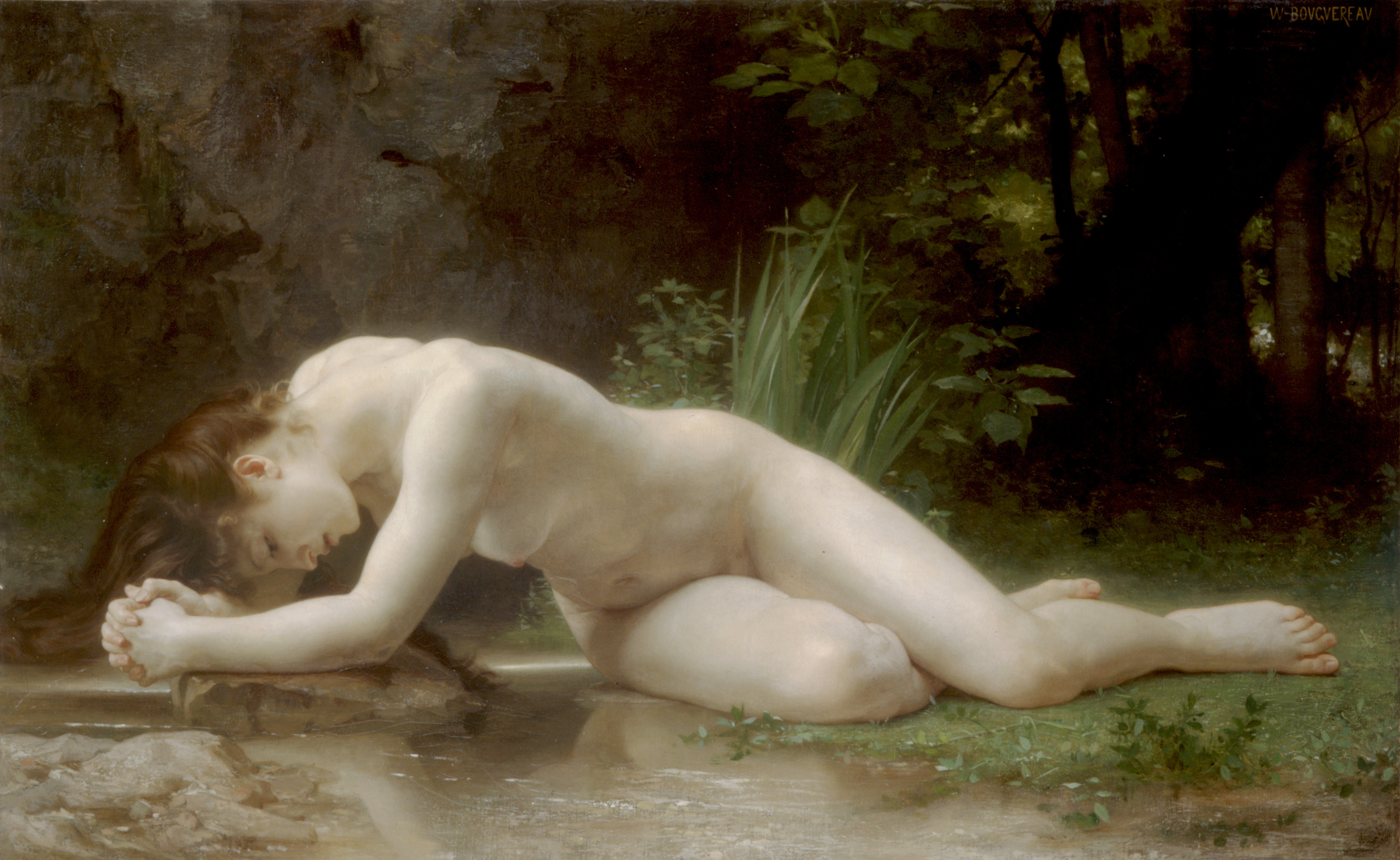
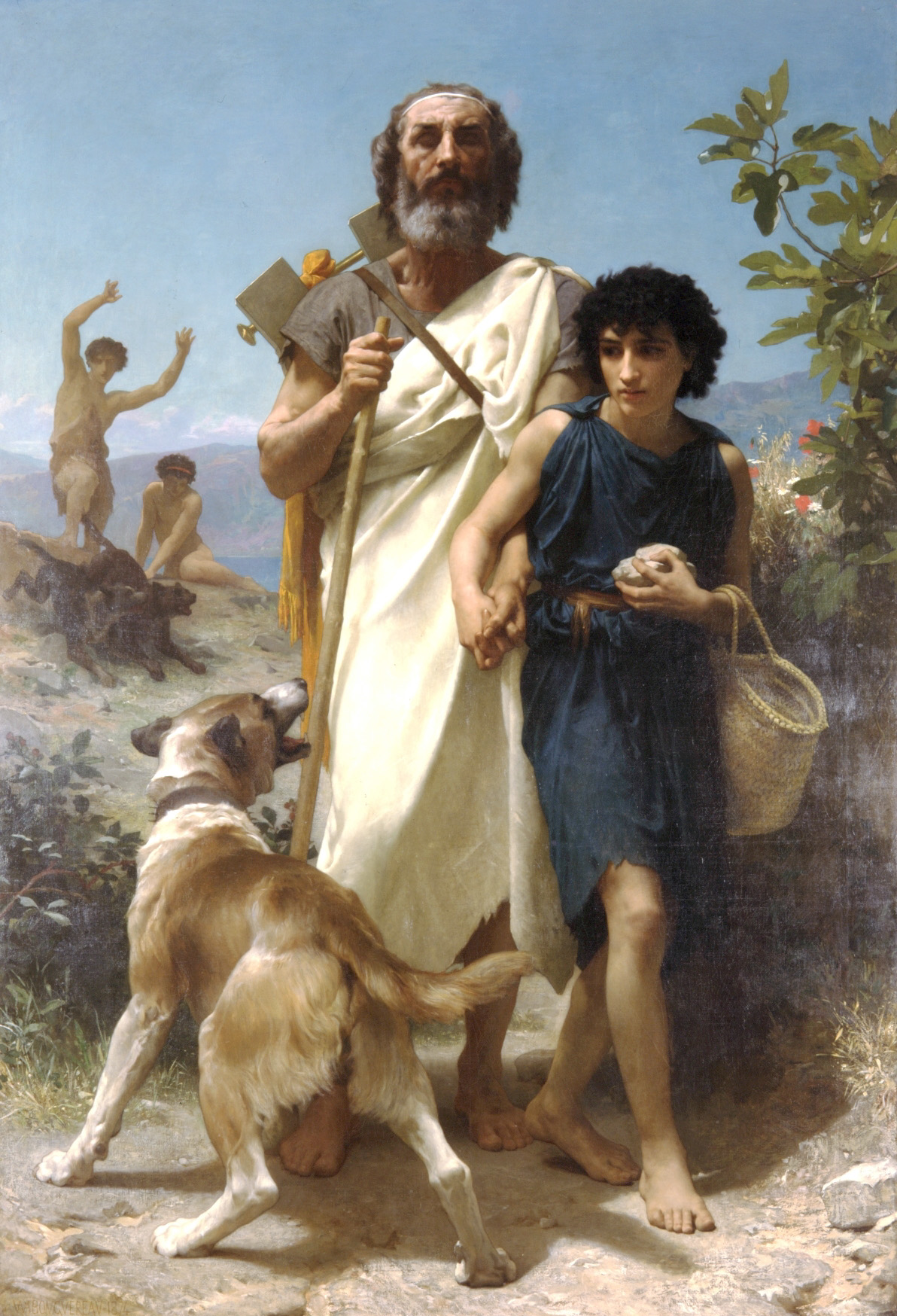
William-Adolphe Bouguereau (30 November 1825 – 19 August 1905) was an academy trained French painter. His intensive study of technique, history and mythology and a decades-long dedication to the craft of painting brought him fame in much of Europe and the United States. He was highly prolific, completing over 800 paintings, and he was awarded numerous official honors and received top prices for his work. His range and proficiency allowed him to create highly realized images of subjects including biblical, historical, mythological and modern allegorical scenes.
William-Adolphe Bouguereau was born in La Rochelle, France, on 30 November 1825, into a family of wine and olive oil merchants. At the age of twelve, Bouguereau went to Mortagne-sur-Gironde to stay with his uncle Eugène, a priest. Bouguereau developed a love of nature, religion, and literature. In 1839, he was sent to study for the priesthood at a Catholic college in Pons. There he learned to draw and paint from Louis Sage, who had studied under Ingres. Bouguereau then reluctantly left his studies to return to his family, now residing in Bordeaux.
There he met a local artist, Charles Marionneau, and commenced at the Municipal School of Drawing and Painting in November 1841. Bouguereau also worked, hand-coloring lithographs and making small paintings that were reproduced using chromolithography. He was soon the best pupil in his class and decided to become an artist in Paris. To fund the move, he sold portraits – 33 oils in three months. All were unsigned and only one has been traced. In 1845, he returned to Mortagne to spend more time with his uncle. He arrived in Paris in March 1846, aged twenty.
Bouguereau became a student at the École des Beaux-Arts. To supplement his formal training in drawing, he attended anatomical dissections and studied historical costumes and archeology. He was admitted to the studio of François-Édouard Picot, where he studied painting in the academic style. Dante and Virgil in Hell (1850) was an early example of his neo-classical works. Academic painting placed the highest status on historical and mythological subjects, and Bouguereau determined to win the Prix de Rome. He eventually won this prestigious residency prize which gave him a three-year stay at the Villa Medici in Rome, Italy. In addition taking formal lessons, he studied firsthand the Renaissance artists and their masterpieces, as well as Greek, Etruscan, and Roman antiquities.
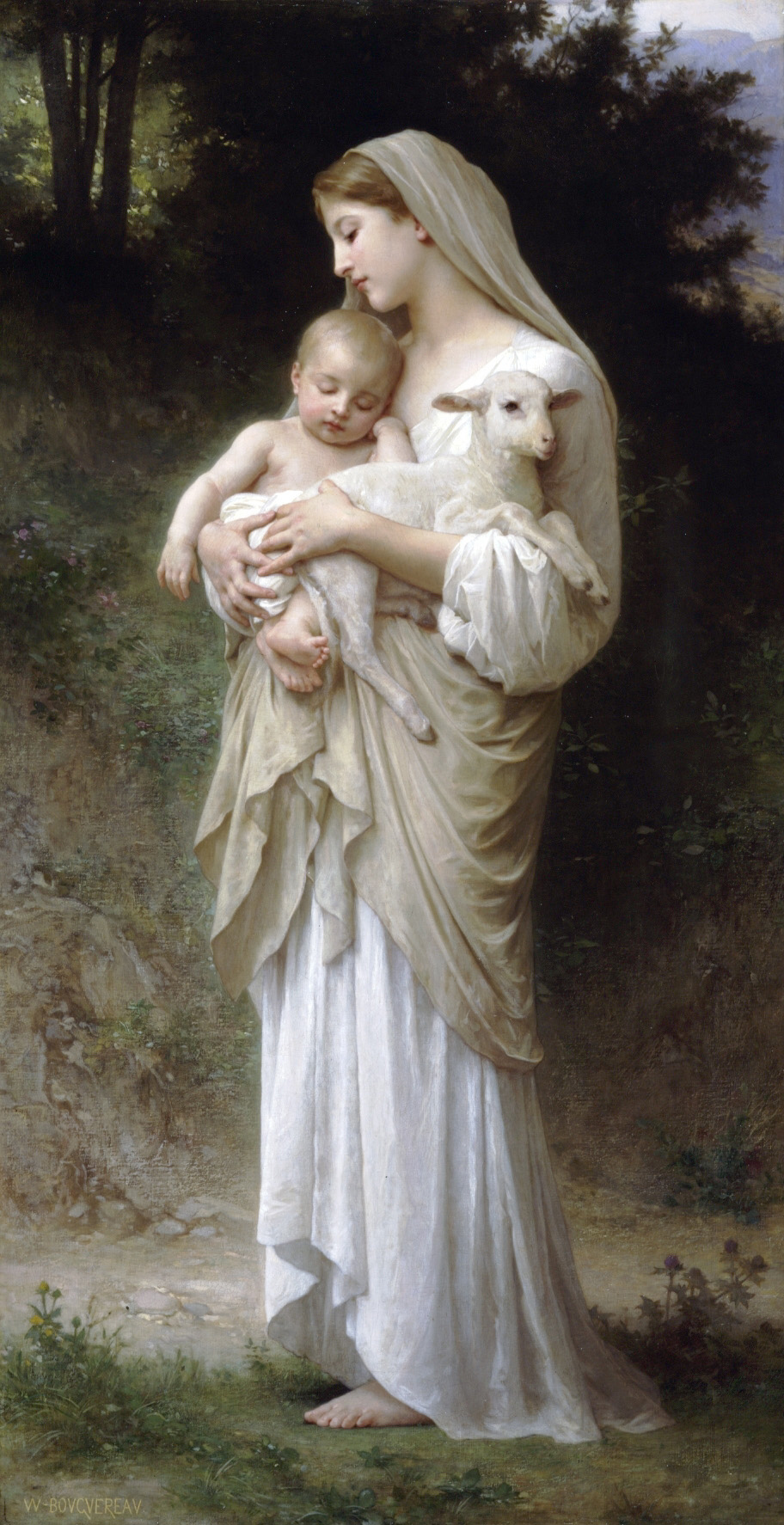
Bouguereau, painting within the traditional academic style, exhibited at the annual exhibitions of the Paris Salon for his entire working life. Bouguereau greatly admired Raphael and had chosen to copy The Triumph of Galatea for one of his Prix de Rome study requirements. In many of his works he followed a similar formal approach to composition, form rendering, and subject matter. Bouguereau’s graceful portraits of women were considered charming because he could capture the most flattering aspects of a likeness.
From the 1860s, Bouguereau was closely associated with the Académie Julian where he gave lessons and advice to art students, both male and female, from around the world. During several decades it is estimated that he taught drawing and painting to over a thousand students.

Bouguereau received many honors from the Academy: he became a Life Member in 1876; received the Grand Medal of Honour in 1885; was appointed Commander of the Legion of Honor in 1885; and was made Grand Officier of the Legion of Honour in 1905. He began to teach drawing at the Académie Julian in 1875, a co-ed art institution independent of the École des Beaux-Arts, with no entrance exams and nominal fees.
In his own time, Bouguereau was considered to be one of the greatest painters in the world and held in high esteem by the academic art community. Meanwhile, was reviled by iconoclasts who begrudged their own rejection from the academy. He gained wide fame in Belgium, the Netherlands, Portugal, Spain, Italy, Romania and in the United States. His works often sold within days of completion. Some were viewed by international collectors and bought before work had even finished.

Bouguereau’s technical proficiency and choices of academic subject matter at the end of the 19th century stood in stark contrast with Impressionism and the unskilled habits in painting that were gaining popularity. In retrospect, Bouguereau was a pivotal figure. He was technically skilled and trained in a centuries-long tradition. He was, in turn, a generous teacher of those same skills. Yet, because of skill and dedication being at the core of his immense success, he was a prime target for some who disparaged these values.
Bouguereau once wrote practical advice that throws the nature of the controversy of the time into sharp relief:
Theory has no place … in an artist’s basic education. It is the eye and the hand that should be exercised during the impressionable years of youth …. It is always possible to later acquire the accessory knowledge involved in the production of a work of art, but never — and I want to stress that point — never can the will, perseverance, and tenacity of a mature man make up for insufficient practice. And can there be such anguish compared to that felt by the artist who sees the realization of his dream compromised by weak execution?1
After decades of the suppression of 19th century academically trained artists, a revival of interest in figure painting led to a renewed admiration for Bouguereau. The New York Cultural Center staged a show of Bouguereau’s work in 1974—partly as a curiosity, although curator Robert Isaacson had his eye on the long-term rehabilitation of Bouguereau’s legacy and reputation. In 1984, the Borghi Gallery hosted a commercial show of 23 oil paintings and one drawing. In the same year, a major exhibition was organized by the Montreal Museum of Fine Arts in Canada. The exhibition opened at the Musée du Petit-Palais, in Paris, traveled to The Wadsworth Atheneum in Hartford, and concluded in Montréal. More recently, resurgence in the artist’s popularity has been promoted by American collector Fred Ross, who owns a number of paintings by Bouguereau and features him on his website at Art Renewal Center.

In 2019, the Milwaukee Art Museum assembled more than 40 of Bouguereau’s paintings for a major retrospective of his work. The exhibition also travelled to the Memphis Brooks Museum of Art and the San Diego Museum of Art.
Prices for Bouguereau’s works have climbed steadily since 1975, with major paintings selling at high prices: $1.5 million in 1998 for The Heart’s Awakening, $2.6 million in 1999 for The Motherland and $3.5 million for Charity at auction in May 2000. Bouguereau’s works are in many public collections.
Nationality:
French
Dates:
November 30, 1825 – August 19, 1905
Occupation:
Painter
Schools attended:
École des Beaux-Arts
Taught at:
Student of:
François-Édouard Picot, Louis Sage
Teacher of:
Elizabeth Jane Gardner, Cecilia Beaux, Jefferson David Chalfant, Minerva Chapman, Pierre-Auguste Cot, E. Irving Couse, Robert Henri, Anna Klumpke, Lawton Parker, Walter Schofield, Alfred-François Delobbe, Frederick Waugh, Frank Bicknell, Eanger Irving Couse, Louis Dessar, Gaines Donoho, Eurilda France, Ellen Day Hale, Edward Redfield, Henry Ossawa Tanner, Paul Chabas, Mary MacMonnies and Thomas Anshutz
- William Bouguereau, ‘Discours de M. Bouguereau’ in Seance publique annuelle des cinq Academies du 24 octobre 1885, Institut de France, pp. 10-11. via https://www.artrenewal.org/Article/Title/bouguereau-at-work ↩︎