Biography
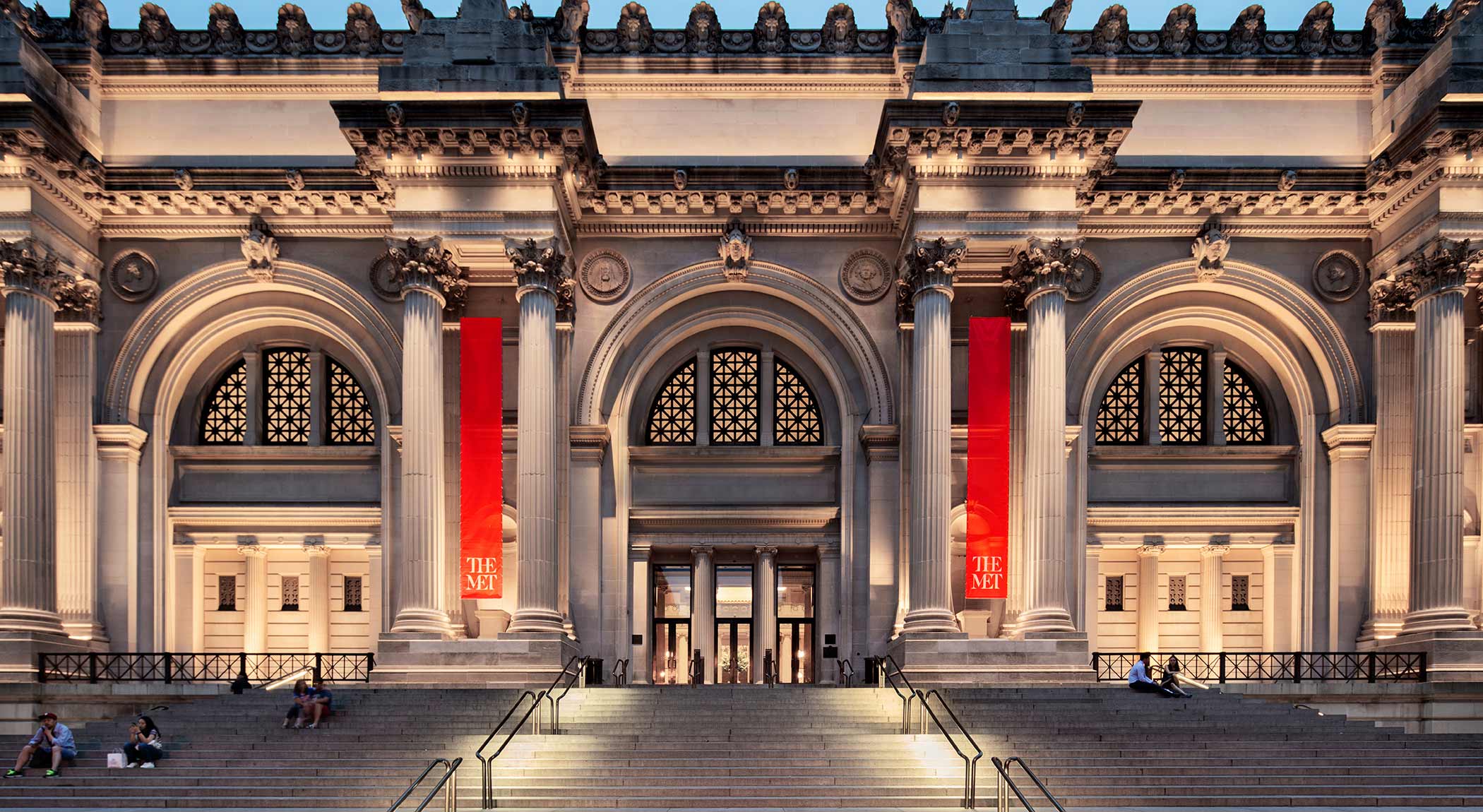
Richard Morris Hunt (October 31, 1827 – July 31, 1895) was an American architect of the nineteenth century and an eminent figure in the history of American architecture. He helped shape New York City with his designs for the 1902 entrance façade and Great Hall of the Metropolitan Museum of Art, the pedestal of the Statue of Liberty, many Fifth Avenue mansions (since destroyed), the Biltmore Estate, America’s largest private house, near Asheville, North Carolina, and for his elaborate summer cottages in Newport, Rhode Island. Hunt’s work set a new standard for the social elite and the newly minted millionaires of the Gilded Age, as well as creating iconic public buildings that continue to be internationally recognized as major landmarks.
Hunt studied in Europe (1843–54), mainly at the École des Beaux-Arts in Paris, where he was the first American to be trained. He established the manner and traditions of the French Beaux-Arts style in the United States. He was instrumental in setting standards for American professional architecture and building; he took a prominent part in the founding of the American Institute of Architects and from 1888 to 1891 was its third president. Hunt also played a key role in establishing the American School of Architecture in Rome in 1894, which has become the American Academy in Rome. His eclectic work was almost equally successful in the ornate style of the early Renaissance in France, the picturesque villa style, and the monumental Classical style of the Lenox Library.
In 1854 he was appointed inspector of works on the buildings connecting the Tuileries with the Louvre. Under Hector Lefuel he designed the Pavillon de la Bibliothèque (“Library Pavilion”), opposite the Palais-Royal.

In 1855 Hunt returned to New York and was employed on the extension of the Capitol in Washington, D.C. He designed the Lenox Library (1870–77; destroyed), the Tribune Building (1873–76), and the facade of the Metropolitan Museum of Art (1894–1902) in New York City; the pedestal of the Statue of Liberty in New York Harbor; the theological library and the Marquand Chapel at Princeton University, Princeton, New Jersey; the Divinity College and the Scroll and Key Club at Yale University, New Haven, Connecticut; the Vanderbilt Mausoleum on Staten Island, New York City; and the Yorktown Monument in Yorktown, Virginia. For the administration building at the World’s Columbian Exposition in Chicago in 1893, Hunt received the gold medal of the Royal Institute of British Architects.
One of Hunt’s later projects was The Jackson Square Library, built in 1887 with funds from George Vanderbilt III. This particular library — one of the very first purpose-built free and open public library buildings in New York — was also one of the very first libraries to introduce the innovation of open stacks. This allowed the public to actually pick books off the shelves themselves, rather than having to find a card number in a catalog and ask a librarian to retrieve the book for them, which was to this point standard practice to prevent theft. The building continued to operate as a library until it was decommissioned in the early 1960s.
Hunt died at Newport, Rhode Island in 1895, and was buried at Newport’s Common Burying Ground and Island Cemetery. In 1898, the Municipal Art Society commissioned the Richard Morris Hunt Memorial, designed by the architect Bruce Price, with a bust of Hunt and two caryatids (one representing art, the other architecture) sculpted by Daniel Chester French. The memorial was installed in the wall of Central Park along Fifth Avenue near 70th Street, across the avenue from Hunt’s Lenox Library, which has since been replaced by the Frick Collection.
Source: britannica.com/biography/Richard-Morris-Hunt
Nationality:
American
Dates:
October 31, 1827 – July 31, 1895
Occupation:
Architect
Schools attended:
École des Beaux-Arts
Taught at:
Student of / Worked for:
Hector Lefuel
Teacher of:
Movement / Group:
Beaux-arts