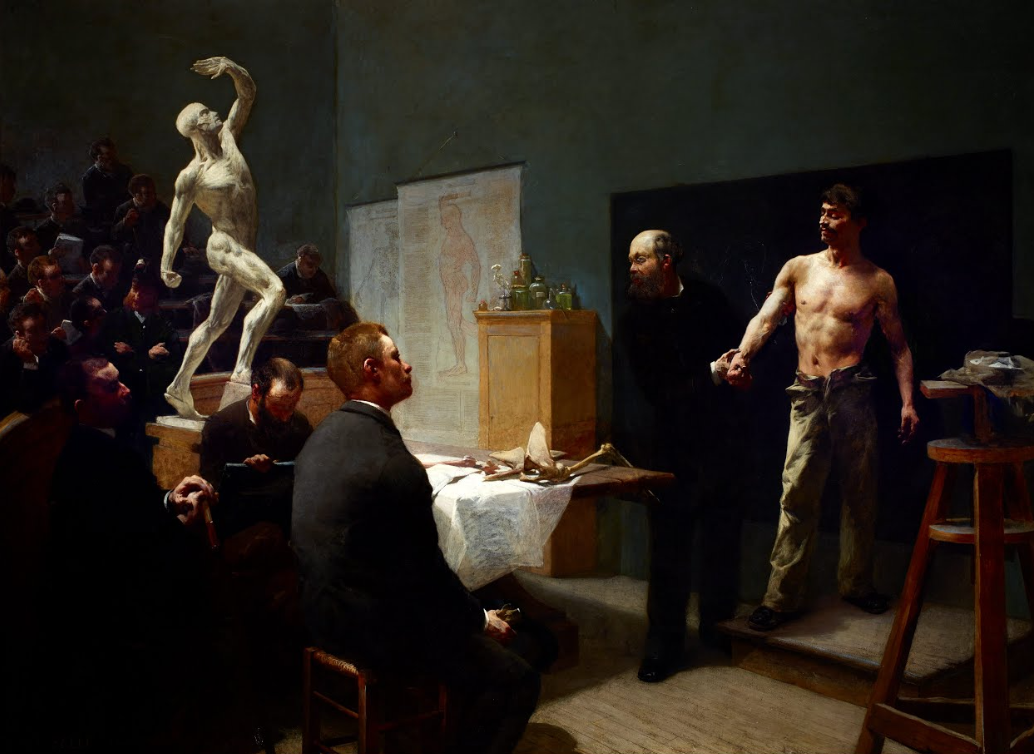
The Beaux-Arts de Paris is the original of a series of Écoles des beaux-arts in French regional centers. Since its founding in 1648, the Académie royale de peinture et de sculpture has had a school, France’s elite institution of instruction in the arts. Its program was structured around a series of anonymous competitions that culminated in the grand prix de l’Académie Royale, more familiar as the Grand Prix de Rome, for its winner was awarded a bourse and a place at the French Academy in Rome. During his stay in Rome, a pensionnaire was expected to send regular envois of his developing work back to Paris. Contestants for the Prix were assigned a theme from the literature of classical antiquity; their individual identities were kept secret to avoid any scandal of favoritism.
Rinaldo and Armida, François Boucher’s morceau de réception, gained his admission to the Académie royale in 1734.
With his final admission into the Académie, the new member had to present his fellow academicians a morceau de réception, a painting or sculpture that demonstrated his learning, intelligence, and proficiency in his art. Jacques-Louis David’s Andromache Mourning Hector was his reception offering in 1783; today it is in the collections of the Louvre Museum.
In 1793, during the French Revolution, the Académie Royale and the grand prix de l’Académie Royale were abolished, but only a few years later, in 1797, the Prix de Rome was re-established. Each year throughout the nineteenth century, the winner of the Prix de Rome was granted five years of study at the Villa Medici, after which the painter or sculptor could fully expect to embark on a successful official career.
The program resulted in the accumulation of some great collections at the Académie, one of the finest collections of French drawings, many of them sent as envoies from Rome, as well as the paintings and sculptures, usually the winners, of the competitions, or salons. Lesser competitions, known as the petits concours, took themes like history composition (which resulted in many sketches illustrating instructive moments from antiquity), expressions of the emotions, and full and half-figure painting.
In its role as a teaching institution, the École assembled a large collection of Italian and French etchings and engravings, dating from the 16th through the 18th century. Such prints published the composition of paintings to a wide audience. The print collection was first made available to students outside the Académie in 1864.
Nationality:
French
Established:
1648
Subjects:
Painting, Sculpture, Architecture
Group / Movement:
Beaux-arts
Prominent Teachers and Students:
Discover the École des Beaux-arts alumni and instructors.
