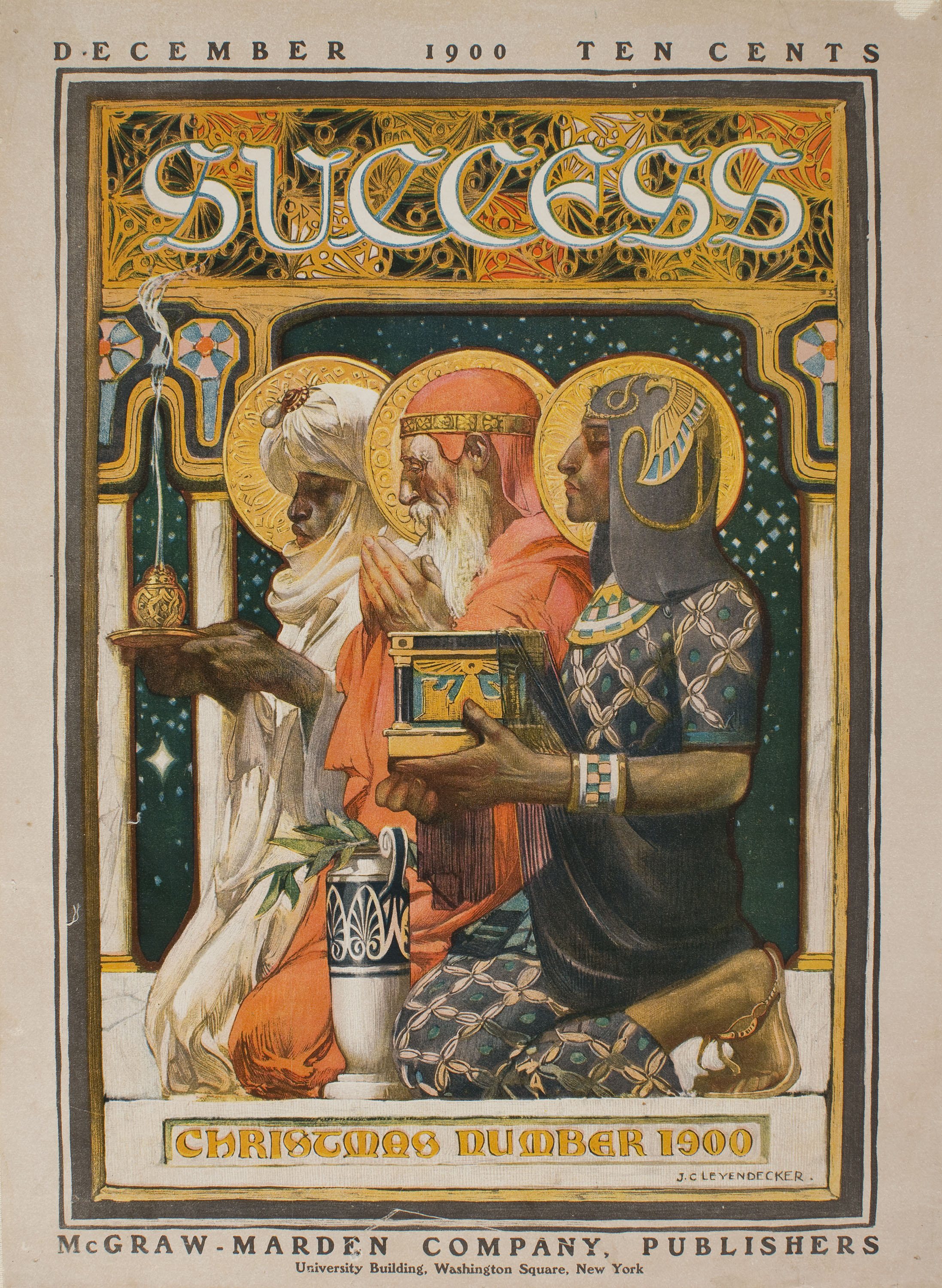
The first memory I have of J.C. Leyendecker’s work was on a calendar in my mother’s kitchen. I loved the humor, the elegance, and the symbolism in his work. I also remember being struck by how vivid, confident, and fresh his paintings looked, even in reproduction. They looked at once from another era, and yet, somehow new and real, like I would recognize the people in the paintings if I saw them on the street.

Joseph Christian Leyendecker was one of the most prominent and successful freelance commercial artists at end of the Golden Age of American Illustration. During his career, from about 1895 to 1951, the modern world took shape. His work spanned the rise of the consumer automobile, the dawn of flight, the Great Depression, and two world wars. His drawings and paintings graced hundreds of posters, books, advertisements, and magazine covers and stories, many of which dealt with great turmoil, and at the same time, the flowering of American culture as we recognize it today. He is best known for his 80 covers for Collier’s Weekly, 322 covers for The Saturday Evening Post, advertising illustrations for B. Kuppenheimer men’s clothing and Arrow brand shirts and collars.

In many of his works published at Christmas time, we see a wide range of themes and a layering of theater, narrative, and symbolism. The biblical nativity of Christ is simplified to one part of the story, the Madonna and Child, or the Three Wise Men, and each design is ensconced in churchly ornament. Simple moments of the tree, stockings, and pie baking at home suggest a deeper sense of hospitality and multi-generational family fondness. The hustle and bustle of gift giving takes on a comic twist with a wide-eyed tike on Santa’s knee, a pater familias carrying a lazy man’s load of gifts and decorations, or a spoiled child howling as he is dragged along on a shopping spree. There are evocative, yet restrained romantic scenes, Dickensian carolers, and the obligatory humor complete with family dogs and toddlers, yet all are sympathetic and beautifully rendered. In the late 1910s, themes turn to remembrance and hope for soldiers overseas.

Taken as a whole, they are a sometimes joyful, sometimes bittersweet, always hopeful glimpse of American life in the early 20th century. Leyendecker combined graceful faces and figures with bold rendering and lively color. The costumes and props are always carefully selected and help set each piece in its particular time and place.

From a 21st century perspective, it is tempting to see these works as mere vintage novelties and commercial illustration. Indeed, that is how they are now usually appropriated and repackaged in the marketplace. Admittedly, many of these were for popular magazines with a broad audience. Commercialism was no stranger to Leyendecker or these publications.

However, unlike today’s lamentable trend toward transforming the very idea of “holidays” into a sales pitch, these paintings tell a much bigger story. Leyendecker was academy trained, and he had a solid grounding in narrative painting. His facility allowed him to go far beyond mere commercial appeal in these images – he augmented the editorial choices and helped to tell, not just to sell the stories in these volumes. He created powerful images that resonate today as yesterday with peoples’ higher hopes and aspirations. Over the many decades in which he produced illustrations for this audience, this is most deeply felt in his illustrations during the season of Christmas.





Leave a Reply