The year 2025 brings timely, unprecedented and provocative exhibitions featuring work from past centuries.
Berlin is showing important works recovered from the war-torn city of Odesa in Ukraine. The United States will see first-ever comprehensive exhibitions for Romantic innovator Caspar David Friedrich and ground-breaking Dutch female artist Rachel Ruysch.
Two exhibitions cast new light on famous artists of the Renaissance. Florence is bringing together quattrocento masterworks in painting and sculpture to create dialogue around art process and production. Copenhagen will represent Michelangelo Buonarroti in 3D printed works alongside sketches and plaster casts from his originals.
These exhibitions are all poised to make important contributions to how we see art of past centuries, and dialogue with them today.
“From Odesa to Berlin: European Painting of the 16th to 19th Century”
Gemäldegalerie Berlin
January 24–June 22, 2025

From the Staatliche Museen zu Berlin website:
The Gemäldegalerie is showcasing 60 paintings from the Museum of Western and Eastern Art in Odesa, the famous port city in the south of Ukraine that has in recent years been ravaged by war. The artworks in question were evacuated from the city before the onset of war and transferred to safety in Berlin, where they will be brought into dialogue with paintings from the collections of Berlin’s museums. The large-scale special exhibition, which follows on from a small preview presentation in the spring of 2024, is an extraordinary collaborative project funded by the Federal Government Commissioner for Culture and the Media.
Shortly before the onset of Russia’s war of aggression, the most significant works held in the Odesa Museum’s collection were transferred to an emergency storage facility in a bid to safeguard them. The paintings in question are by European artists from the 16th to 19th century and include works by such prominent figures as Andreas Achenbach, Francesco Granacci, Frans Hals, Cornelis de Heem, Roelant Savery, Bernardo Strozzi, Alessandro Magnasco and Frits Thaulow.
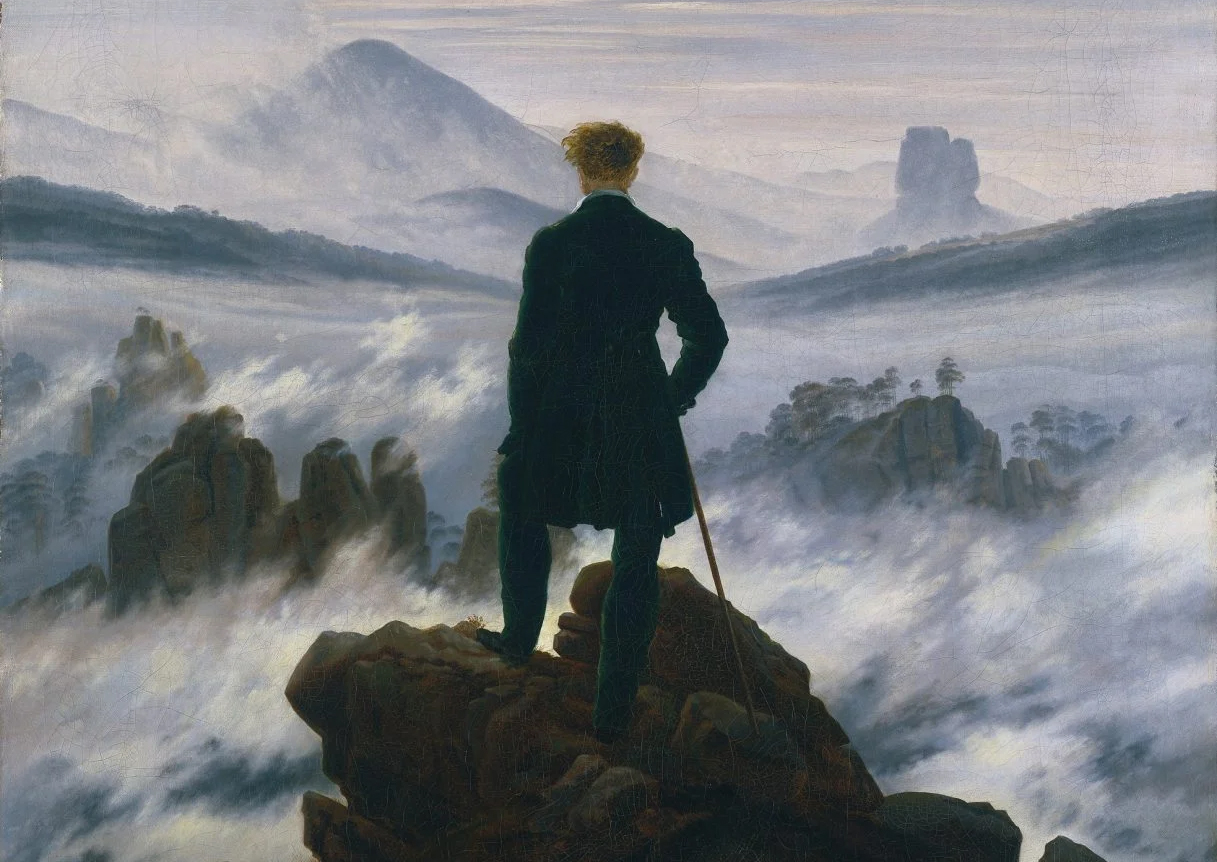
“Caspar David Friedrich: The Soul of Nature”
The Metropolitan Museum of Art, New York
February 8–May 11, 2025

From the Metropolitan Museum website:
Caspar David Friedrich (1774–1840) reimagined European landscape painting by portraying nature as a setting for profound spiritual and emotional encounters. Working in the vanguard of the German Romantic movement, which championed a radical new understanding of the bond between nature and the inner self, Friedrich developed pictorial subjects and strategies that emphasize the individuality, intimacy, open-endedness, and complexity of our responses to the natural world. The vision of the landscape that unfolds in his art—meditative, mysterious, and full of wonder—is still vital today.
Presented in honor of the 250th anniversary of Friedrich’s birth in 2024, Caspar David Friedrich: The Soul of Nature is the first comprehensive exhibition dedicated to the artist held in the United States. Organized in cooperation with the Alte Nationalgalerie of the Staatliche Museen zu Berlin, Staatliche Kunstsammlungen Dresden, and Hamburger Kunsthalle, with unprecedented loans from more than 30 lenders in Europe and North America, the exhibition will present approximately 75 works by Friedrich. Oil paintings, finished drawings, and working sketches from every phase of the artist’s career, along with select examples by his contemporaries, will illuminate how Friedrich developed a symbolic vocabulary of landscape motifs to convey the personal and existential meanings that he discovered in nature. The exhibition will situate Friedrich’s art within the tumultuous politics and vibrant culture of 19th-century German society and, by extension, highlight the role of German Romanticism in shaping modern perceptions of the natural world.
“Michelangelo”
National Museum of Art (Statens Museum for Kunst), Copenhagen
March 29–August 31, 2025

From the Statens Museum for Kunst website:
He painted the ceiling of the Sistine Chapel and designed the dome of St. Peter’s Basilica in Rome, but first and foremost, he saw himself as a sculptor – and his huge David sculpture in Florence is known worldwide. In the spring of 2025, we will focus on one of the most famous figures in Western art: Michelangelo Buonarroti (1475-1564).
In the exhibition, SMK will display its own extensive collection of historical casts of Michelangelo’s sculptures alongside brand new, high-quality 3D-cast replicas. In this way, you can experience the majority of Michelangelo’s sculptures in one place – something that would be impossible with the originals, which are never moved. You will also be able to see the largest selection of Michelangelo’s original drawings, letters, and sculpture models ever displayed in Denmark.
Join us as SMK unfolds Michelangelo’s life and art through close studies of his sculptures and focuses on the complex relationship between original and reproduction in the digital age.
“Rachel Ruysch: Nature into Art”
Toledo Museum of Art
April 13–July 27, 2025

From the Toledo Museum website:
The Toledo Museum of Art presents the first monographic exhibition of the eminent Dutch flower still life painter Rachel Ruysch (1664–1750). The exhibition will bring together her most important works from European and American public and private collections, including works that have never been exhibited publicly as well as new discoveries. We invite you to discover Rachel Ruysch’s masterful brushwork, her illusionistic depictions of the natural world, the astonishing botanical diversity and teeming insect and animal life in her paintings, and how her works reflect the intersections between painting, nature, and science.
At a time when women’s access to careers as professional artists was severely limited, Ruysch nevertheless became highly successful and widely renowned. She was born into a well-to-do family and was the daughter of the renowned professor of anatomy and botany Frederik Ruysch, who apprenticed her to one of the premier flower still life painters of the day. She married a painter, had eleven children, became the first female member of the artist’s guild in The Hague and a court artist to one of the most important German nobles, won the lottery (twice!), was among the highest-paid artists of her time, and continued to paint until she was 83 years of age. Despite the great success she experienced during her lifetime, Ruysch has never received the attention she deserves. The exhibition explores her fascinating life and work for the first time and juxtaposes them with those of her sister Anna, who was an accomplished flower painter in her own right but is all but forgotten today.
“Angelico”
Fondazione Palazzo Strozzi and Museo di San Marco (Convent), Florence
September 26, 2025–January 25, 2026

The Fondazione Palazzo Strozzi and the Museo di San Marco present Angelico, an extraordinary exhibition dedicated to Fra Angelico, a key figure of the Quattrocento in Florence.
The exhibition, co-organized with the Direzione regionale Musei nazionali Toscana of the Ministry of Culture, celebrates one of the founding fathers of Renaissance art in Florence. Spread across two venues—Palazzo Strozzi and the Museo di San Marco—the exhibition will explore the production, development, and influence of Fra Angelico’s work in dialogue with painters such as Masaccio, Filippo Lippi, and Lorenzo Monaco, as well as sculptors like Lorenzo Ghiberti, Michelozzo and Luca della Robbia.
The exhibition will also provide the opportunity to restore extraordinary masterpieces and reunite, for the first time in over two hundred years, works by one of the greatest masters of Italian art. This unique event will feature loans from some of the world’s most important museums and institutions, including the Louvre in Paris, the Gemäldegalerie in Berlin, the Metropolitan Museum of Art in New York, the National Gallery of Art in Washington, the Kunsthistorisches Museum in Vienna, and the Philadelphia Museum of Art.
After exploring the elegant language of Gothic painting, Fra Angelico (circa 1395–1455) enthusiastically took on the new principles of Renaissance art then emerging in Florence. He created works that display a mastery in perspectival space and the light that envelops the figures. The exhibition will allow for an exploration of the quality and absolute level of this artist as never before, bringing out his capacity for artistic innovation in service of deep spiritual values that were founded on a profound meditation of the sacred as reflected in the world of humanity.
Leave a Reply