I just completed the first semester of a Masters in Art History at The Courtauld in London. The second-to-last week before the end of term, our High Middle Ages group visited several sites around Paris: Notre-Dame de Paris, The Bibliothèque nationale de France, Saint-Denis, the Sainte-Chapelle, and the Musée de Cluny.
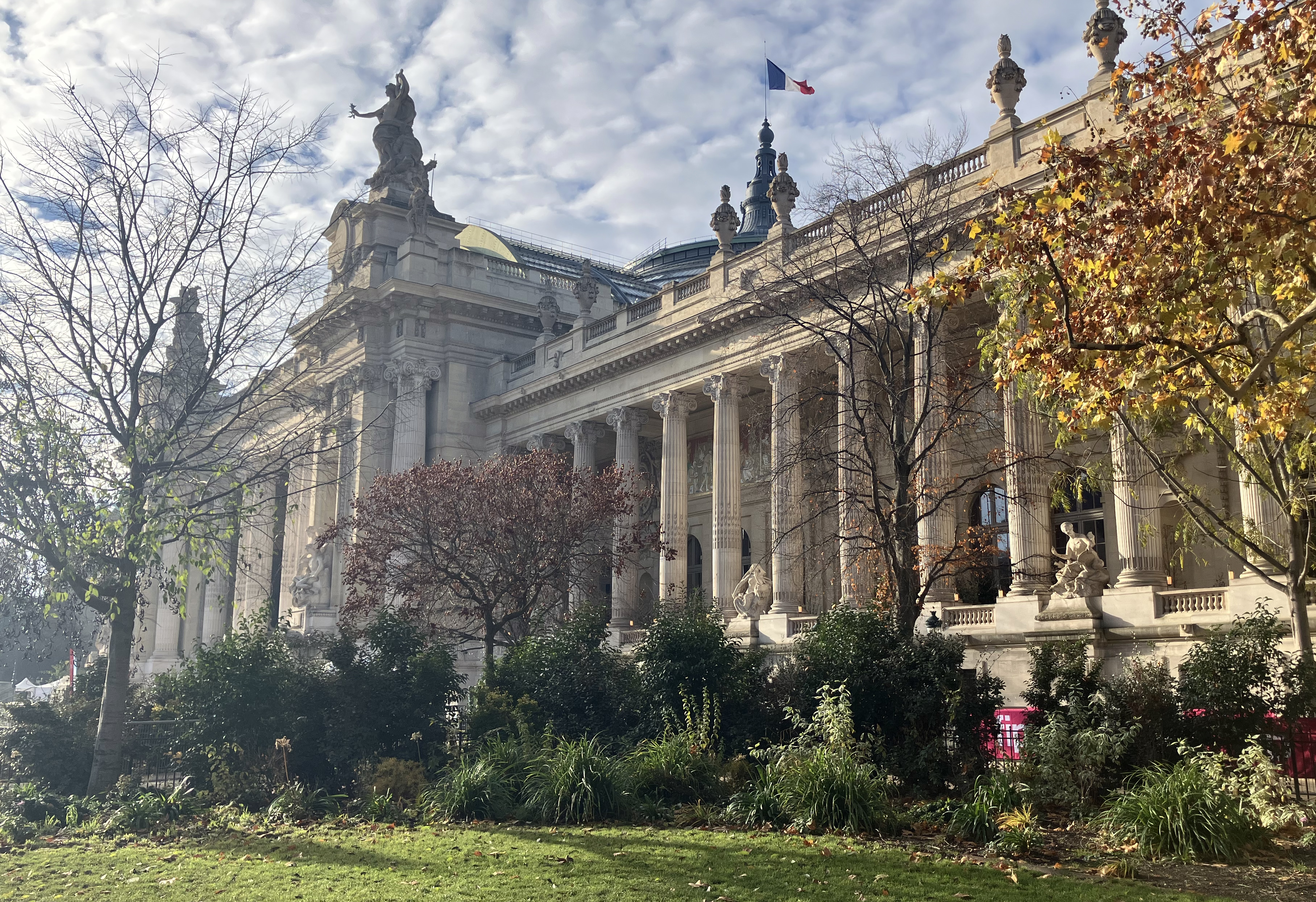
I took the Eurostar from King’s Cross / St. Pancras to Paris Gare du Nord a few days early, and stayed in the 9th Arrondissement, about a twenty-five minute walk from the train station. The first few days were quiet, as the rest of my group would arrive over the weekend, so I spent the time writing my final essays for the semester. On Friday and again on Sunday, I visited the Petit Palais to look at one of my favorite paintings and do some sketching from the exceptional nineteenth century life-size plaster sculptures.


With all of my attention on completing course work since mid-November, I had not done my customary planning before traveling, so I was unaware that the Petit Palais had a special exhibition of Jean-Baptiste Greuze.
Greuze’s career is an interesting case in considering how academic training and popular taste shape the conditions for an artist, his audience, and his aspirations. Born at Tournus, a market town in Burgundy, Greuze showed talent at an early age, but had to be persuaded by a successful Lyonnese portrait artist named Grandon to travel to Paris to further his training. He entered the Royal Academy and hoped to become a history painter, regarded as the most prestigious by the art establishment at the time. Greuze had early success in “genre” paintings of mythology and allegory, but his transition to history painting was an utter failure.


His history painting Severus and Caracalla was exhibited in 1769 side by side with his other works. The Academy accepted his application form membership, but Director addressed Greuze by saying: “Sir, the Academy has accepted you, but only as a genre painter; the Academy has respect for your former productions, which are excellent, but she has shut her eyes to this one, which is unworthy, both of her and of you yourself.”

Incensed at the negative reception by the Academy, Greuze would refuse to submit work there for thirty-four years. He returned to genre and portrait painting, where he continued to produce fine work for decades. His delicate portraits of children are charming and sympathetic, and his young women have a softness and sensous sensitivity rarely seen in work of the 18th century.
However, through mismanagement and his wife’s embezzlement, he was reduced to poverty. He finally returned to exhibit at the Academy in 1804 after the French Revolution had overturned the old institution, but died in poverty the next year, in March of 1805.
The exhibition highlighted several of his portraits, and also gave special attention to the preparatory studies and large canvas that was at the focus of his unfortunate turn away from the Academy.
I spent the rest of my time at the Petit Palais sketching and observing the incredible Crucifixion by Leon Bonnat, which I hope to revisit later to explore the strange story of its creation.


After a few quiet days, on Sunday evening I met a few of my fellow students for a glass of wine and a few games of cards at a little bar on Île Saint-Louis near Notre Dame. The next morning, our group gathered at Notre-Dame de Paris. The nine of us toured Notre-Dame, where a service was ongoing. The crowd of people was prodigious, and we had to be intentional about staying together. We only had a few moments to discuss the art in the space, as we had to keep voices to a whisper.
We then took the Metro to Seine-Saint-Denis to visit the Basilica there. This was an amazing experience, a stone time-capsule in resplendent color from the afternoon light through many stained-glass windows. Seeing a place so important over centuries of the French monarchy was a bit surreal. Saint-Denis holds the remains of Clovis (d. 511), the influence of Charlemagne (d. 814), and the work of Saint Louis (d. 1270), spanning eons of tradition and Christian heritage. Converted to the grand Gothic style by Abbot Suger and Saint Louis, the site is also where the oriflamme, the golden flame battle flag, was kept, which crusaders took with them on their campaigns.
That evening we returned to the city center and had dinner as a group. I joined several of our group after for a visit to the Cave de la Huchette, where a live blues band was playing for dancers. The energy was fantastic, but I only stayed for a few numbers before heading back to my hotel. The next day was going to be very long, with three sites and train travel back to the UK.


Tuesday morning we began at the BnF and their collection of rare and precious art objects. The largest enamel work from the ancient world is housed there, and was in the collection of Louis IX. From there, we visited Sainte-Chapelle, where I gave a presentation about his transfer of the Passion Relics from Constantiople to Paris and his campaigns on crusade.
The upper chapel of the Sainte-Chapelle is a still a wonder today. Its thousands of scenes in soaring stained-glass windows are full of Catholic and royal imagery. This was purpose-built as part of Louis’s palace to house the Passion Relics, especially the Crown of Thorns. You can still see crown imagery all throughout the program of the glass.

Our last stop was at the Musee de Cluny, where many of the important medieval artifacts rescued from the rubble of the French Revolution are now held. The number of defaced statues in France is enormous; like the Reformation in England, the damage of iconoclasm permanently changed the face of the monumental architecture throughout the country. For all its shortcomings, the conservation efforts begun in the nineteenth century began the important work of preserving cultural heritage we still enjoy today.



Leave a Reply